

Finger measurement guide
How to measure a finger for a ring
No ring to copy? Measure the finger itself with a flexible tape or a non-stretch paper strip, then convert the circumference to a size below. Follow the tension and knuckle advice — they are what make a finger measurement trustworthy.
Step-by-step: flexible tape or paper strip
Choose your tool
A flexible measuring tape is ideal. Otherwise, cut a thin strip of paper — not string, not ribbon, both stretch — about 10 mm wide and long enough to wrap around the finger with overlap.
Wrap at the base of the finger
Wrap around the exact finger the ring will be worn on, on the same hand, at the base where the ring will sit. Not at the knuckle, and not on a different finger.
Mark the overlap
With a pen, mark where the tape or strip meets itself. Keep the strip flat against the finger while you mark — lifting it changes the reading.
Lay it flat and read it
Lay the strip flat against a ruler and read the length in millimetres. That length is the finger circumference. Type it into the calculator below.
Repeat, in the evening, and take the largest
Measure twice, in the evening with warm hands. If the readings differ, use the largest — a ring must clear the knuckle to be worn at all.
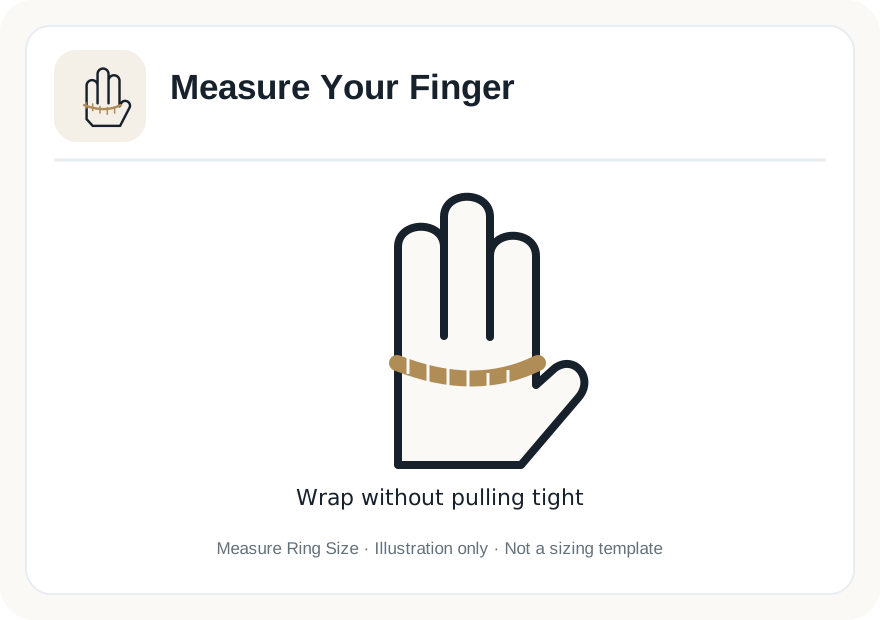
Tension and knuckle — the two things that go wrong
Tension: snug, not tight
The strip should be snug against the skin, with no gap, but it should not dent the finger or squeeze it white. Too tight, and you will order a size that hurts; too loose, and the ring will spin or slip off. The right test: the strip should slide over the knuckle with slight resistance when you push it that far.
Knuckle: size for the wider part
If your knuckle is wider than the base of your finger, the ring has to pass over the knuckle first. Measure the knuckle circumference too, and order for the larger of the two — a ring sized only for the base will not go on. If the difference is large, ask a jeweller about sizing beads or a hinged shank instead of guessing.
Finger circumference calculator
Related guides
- General ring size calculator
The unified calculator, for any measurement type or unit.
- How to measure ring size at home
All three at-home methods compared, with common mistakes.
- Online ring sizer
Have a ring that fits? Measure it on screen instead.